PERMANENT HOLDINGS · NOT FOR SALE
The Reper Collection
Portrait Studies I — Elizabeth II through the Arnold Machin effigy.
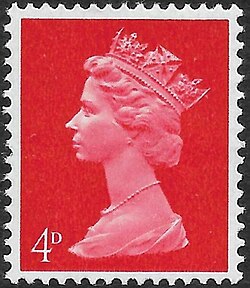
4d definitive · 1967
BEYOND COINAGE
A portrait that travelled the world
In 1964 Arnold Machin was chosen to create a new portrait of Queen Elizabeth II for decimal coinage, introduced from 1968. The effigy remained on British coins until 1984 and also appeared on coinage in Rhodesia, Canada, Australia, and New Zealand.
In 1966 the Queen approved Machin’s related design for Britain’s definitive postage stamps. First issued on the 4d stamp in June 1967, the portrait became one of the most reproduced works of art in history, appearing on approximately 320 billion stamps. Although replacement designs were considered, the Queen never approved a successor, insisting that any alternative would need to be “a work of real quality.”
PORTRAIT STUDY I
The Machin sovereign sequence
A permanent study in scale, proof finish, and the enduring profile of Elizabeth II—from the first proof sovereign of the reign to the key rarity of 1982.
THE EFFIGY
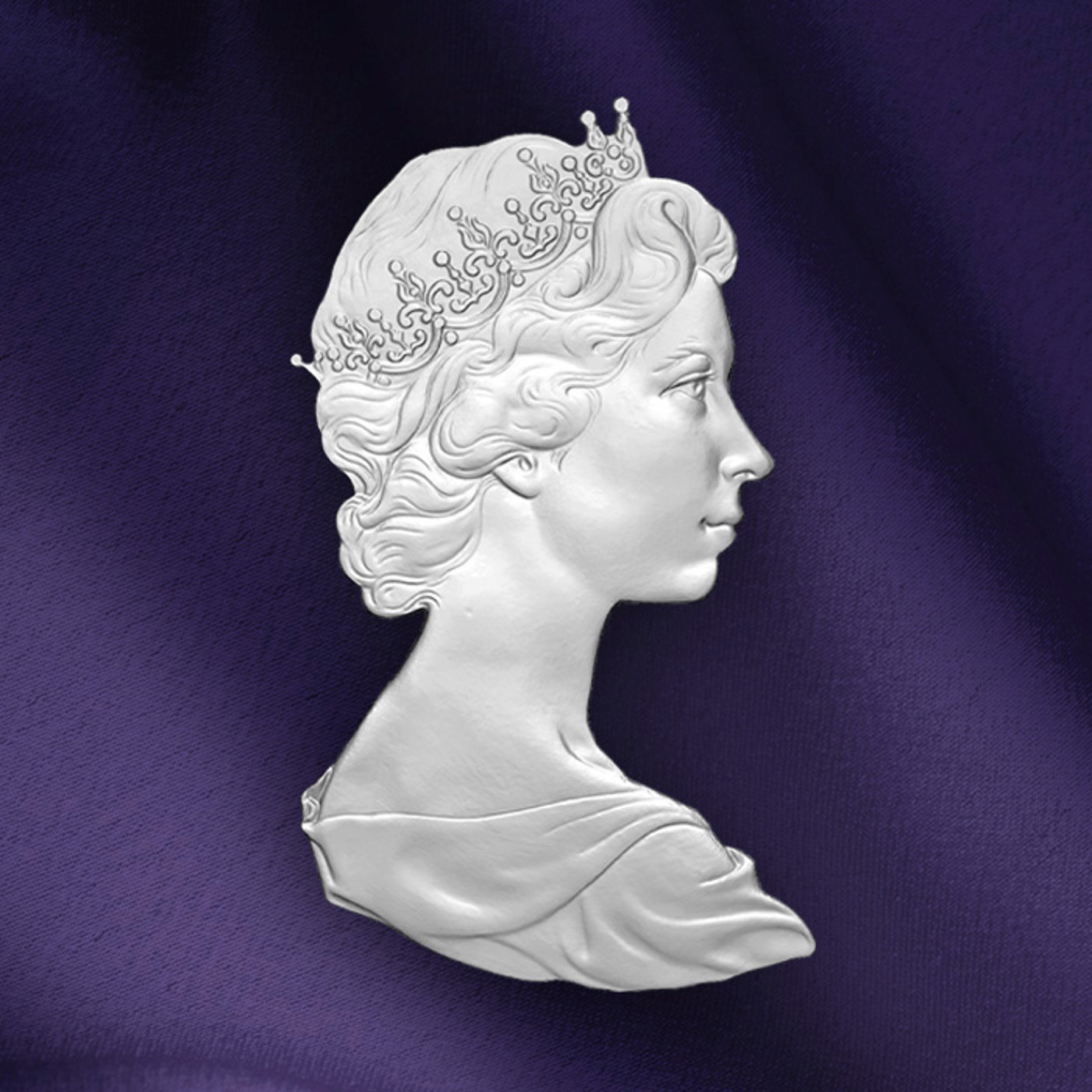
A profile made for permanence
Machin’s dignified, quietly modelled portrait transformed the public face of Elizabeth II. Its remarkable adaptability—from tiny stamps to the largest modern gold sovereigns—makes it the unifying subject of this collection.

1979 · THE OPENING OBJECT
The first proof sovereign of the reign
This single proof sovereign begins the sequence. Its Pistrucci reverse marks the formal return of the sovereign in proof, setting the stage for the Machin portrait’s later appearances across the complete gold sets.
PERMANENT COLLECTION · NOT FOR SALE

1980 · FOUR DENOMINATIONS
The Machin portrait across the complete gold set
The 1980 presentation set brings the five sovereign, double sovereign, sovereign, and half sovereign together in one official Royal Mint issue—each bearing the same composed profile of Elizabeth II.
FIVE SOVEREIGN · NGC PF 70 ULTRA CAMEO · 8220975-002
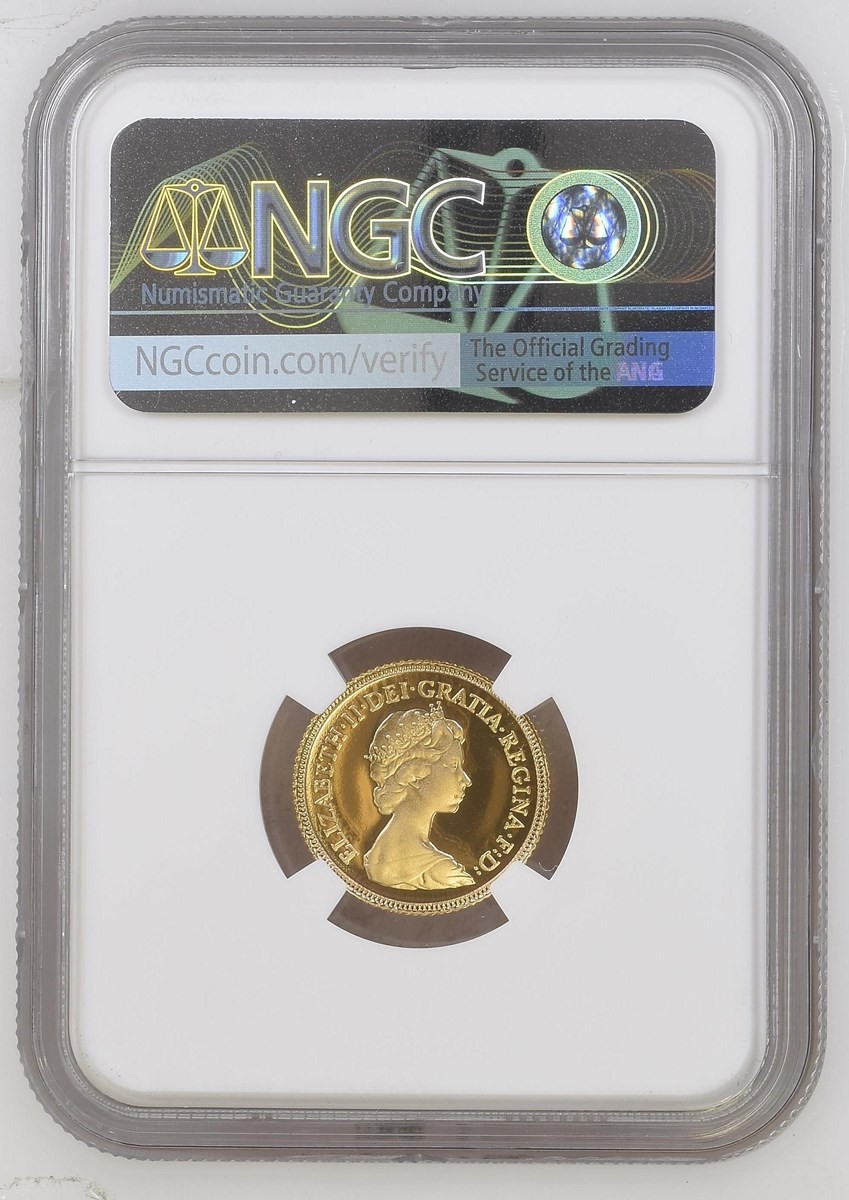
1982 · KEY RARITY
The elusive 1982 half sovereign
Small in scale yet central to the study, the 1982 half sovereign is the scarce issue in this early proof sequence. Its intimate format makes the modelling of Machin’s portrait feel all the more deliberate.
NGC PF 70 ULTRA CAMEO · 6671125-007 · PERMANENT COLLECTION
LARGE-FORMAT PROOF PAIR
Five sovereigns in PF 70 Ultra Cameo
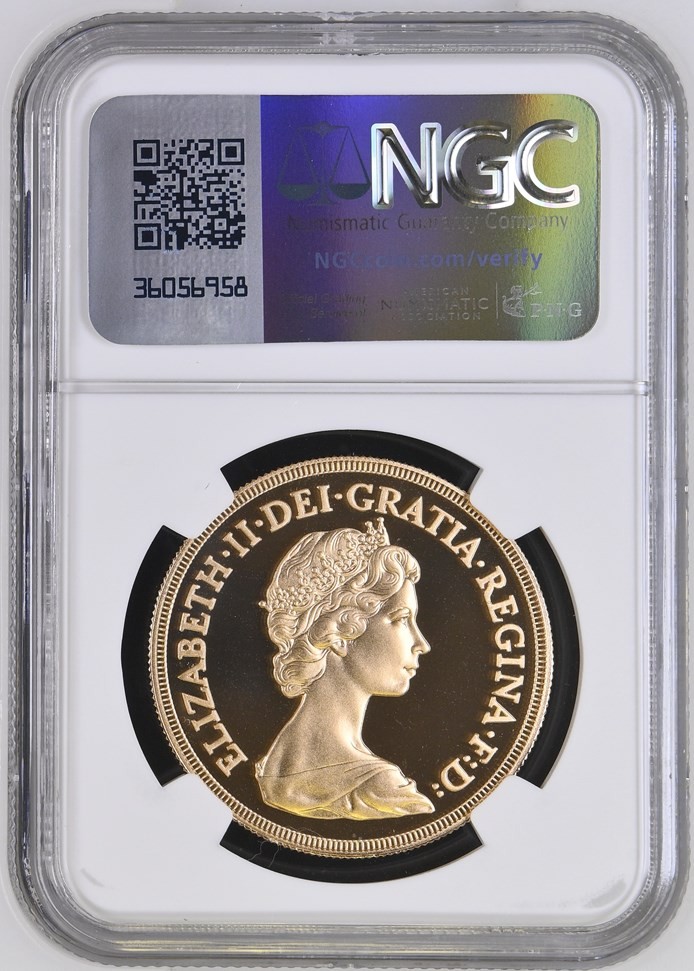
1980 Five Sovereign
NGC PF 70 ULTRA CAMEO · 8220975-002

1981 Five Sovereign
NGC PF 70 Ultra Cameo · 6947238-001
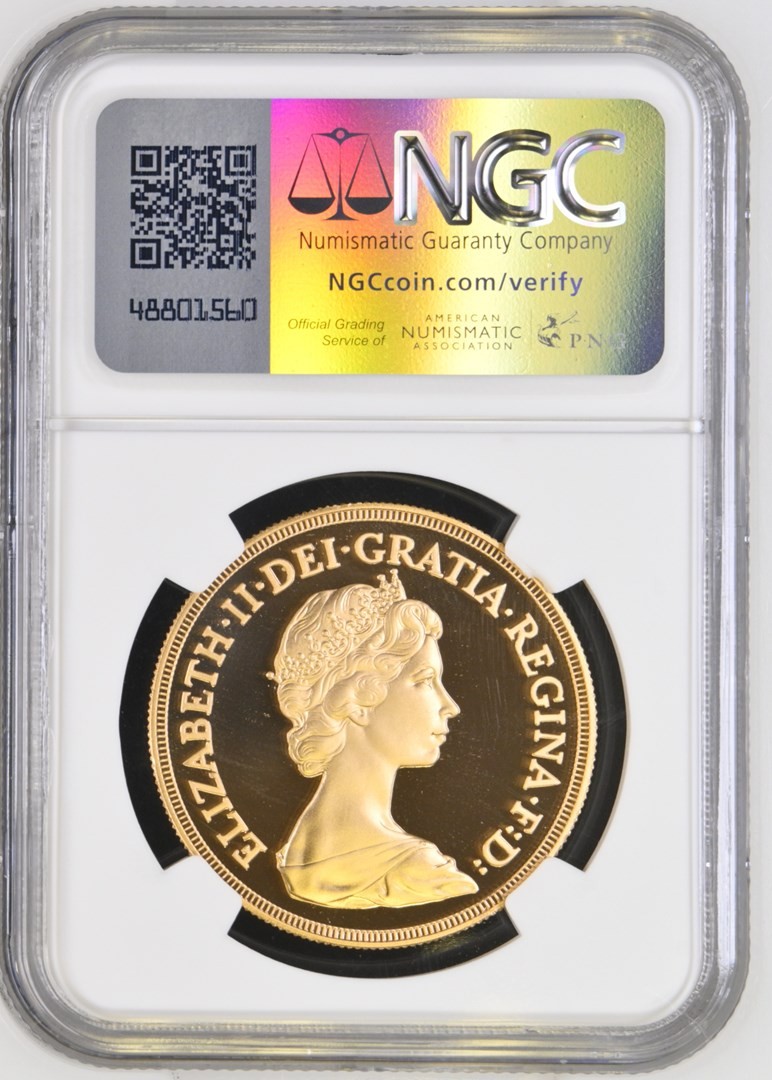
1982 Five Sovereign
NGC PF 70 Ultra Cameo · 2161893-002

1984 Five Sovereign
NGC PF 70 ULTRA CAMEO · 8220975-011
PORTRAIT STUDY II · 49 BC–AD 68
The denarii of the Julio-Claudian dynasty
A family-tree study in Roman power: from Caesar’s claim to divine ancestry to the imperial images of Augustus, Tiberius, Caligula, Claudius, and Nero.
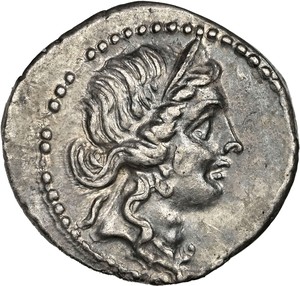

JULIUS CAESAR · 49–46 BC
Venus and Aeneas: a claim to divine ancestry
This denarius projects the mythic lineage at the heart of Caesar’s political identity. Venus appears on the obverse; the reverse shows Aeneas fleeing Troy with his father Anchises, carrying the Palladium. Together, they connect Caesar’s family to the divine founder of Rome.
NGC ANCIENTS CH XF · STRIKE 5/5 · SURFACE 3/5 · 6636827-001
AR Denarius · 3.82 g · Permanent Collection · Not for sale
WATCH COIN STORY 01

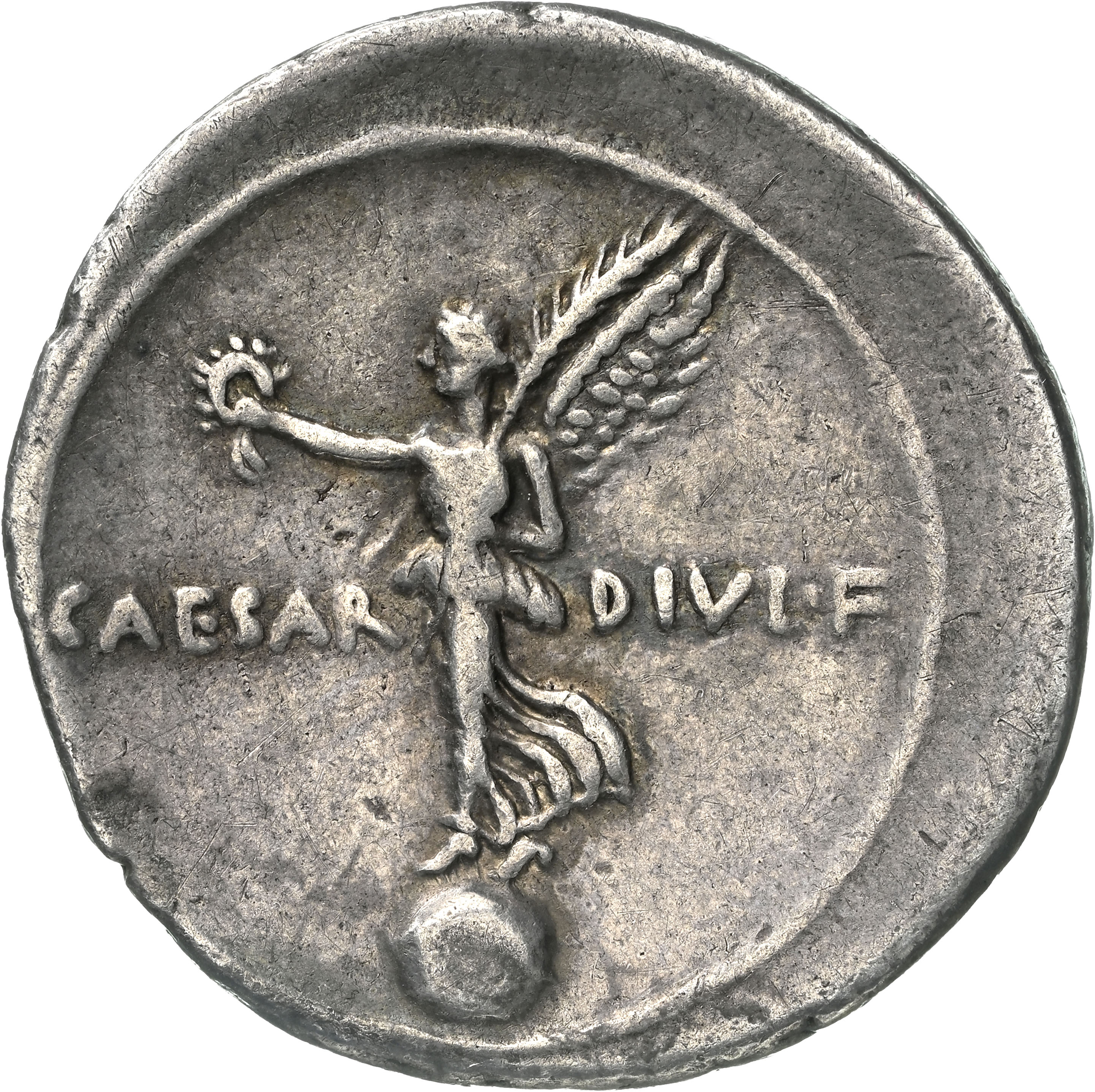
OCTAVIAN (AUGUSTUS) · 31–30 BC
Victory on a globe
Struck at the threshold of the principate, this denarius presents Octavian’s victory as a universal claim. Victory stands on a globe, a compact image of dominion that anticipates the new imperial order under Augustus.
NGC ANCIENTS VF · STRIKE 5/5 · SURFACE 4/5 · 8589455-001
AR Denarius · 3.72 g · Italian mint · Permanent Collection · Not for sale
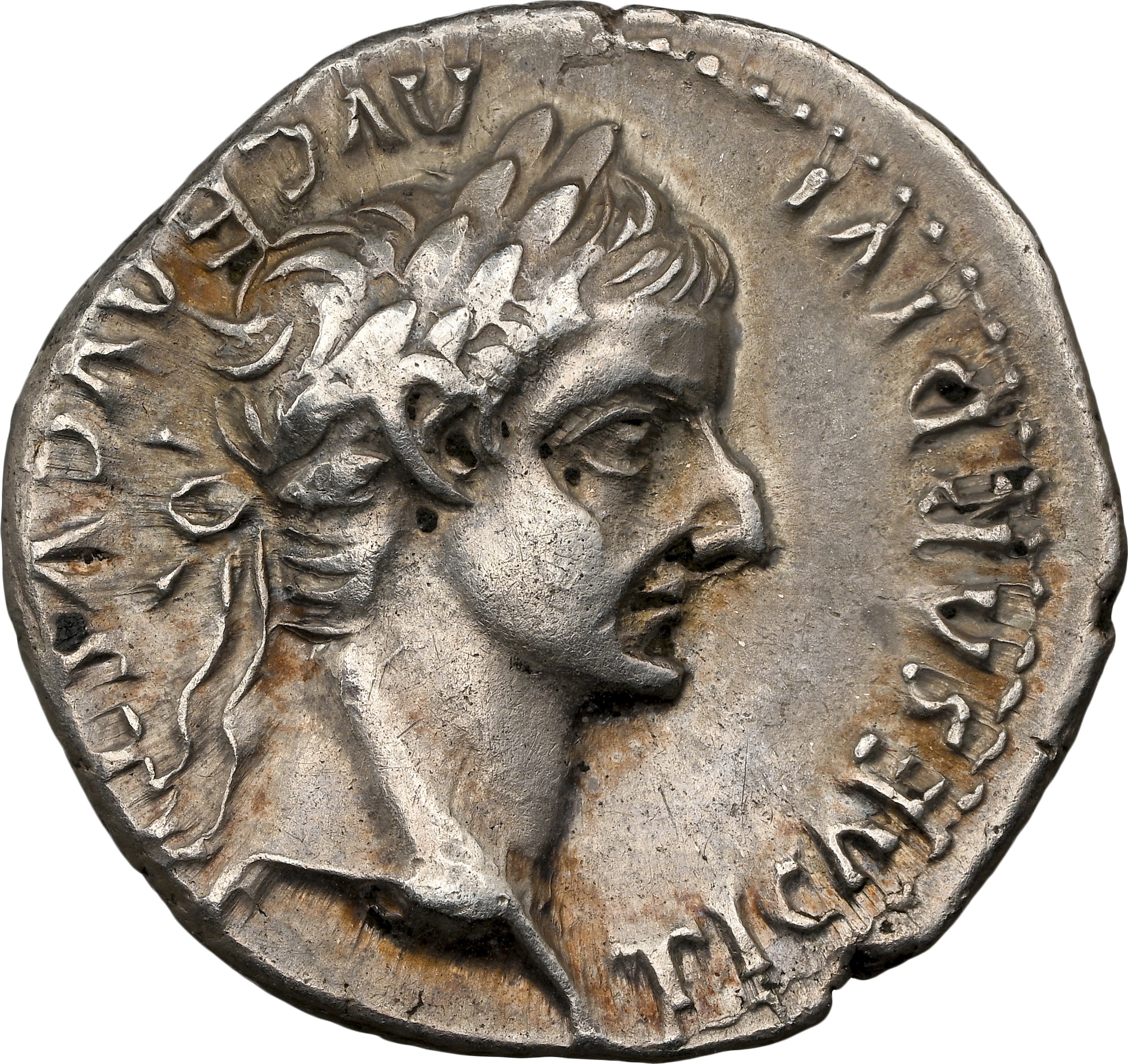

TIBERIUS · AD 14–37
Livia as Pax: continuity made visible
The “tribute penny” type expresses the calm authority of Tiberius’s rule. Its seated reverse figure is traditionally identified as Livia, Augustus’s widow and Tiberius’s mother, shown through the language of Pax—peace, continuity, and inherited legitimacy.
NGC ANCIENTS XF · STRIKE 5/5 · SURFACE 4/5 · 6640488-001
AR Denarius · 3.84 g · Lugdunum · Permanent Collection · Not for sale
WATCH COIN STORY 03


CALIGULA · AD 37–41
Agrippina Senior: dynastic memory as propaganda
Caligula used the denarius to honour his mother, Agrippina Senior, restoring her image to public view after the traumas of Tiberius’s reign. The type turns family remembrance into a powerful statement of legitimacy and filial devotion.
NGC ANCIENTS CH XF · STRIKE 3/5 · SURFACE 4/5 · 6709210-001
AR Denarius · 3.79 g · Permanent Collection · Not for sale
WATCH COIN STORY 04

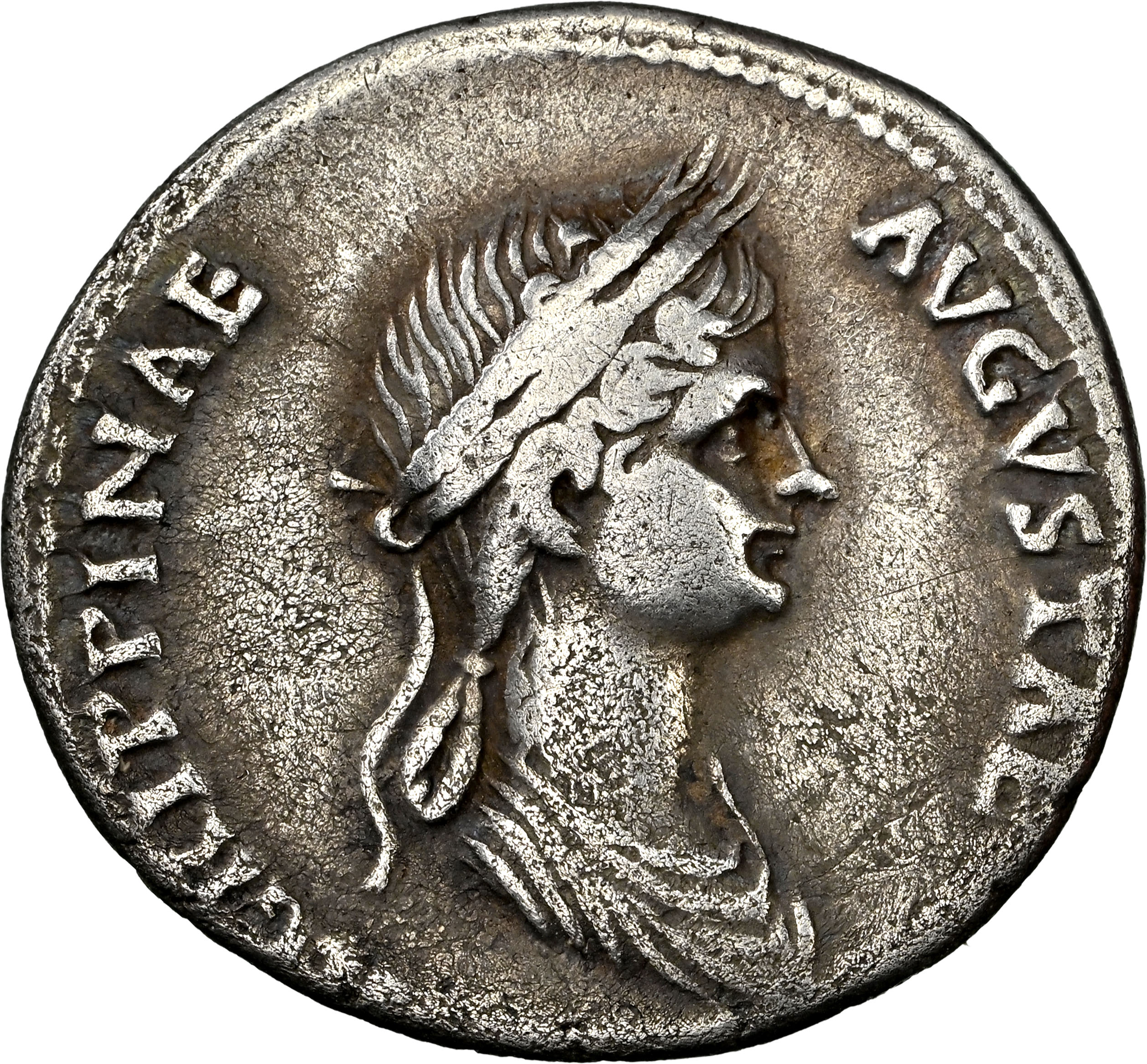
CLAUDIUS · AD 41–54
Agrippina Junior: alliance and succession
Claudius’s denarius makes Agrippina Junior a public partner in rule. The issue memorialises a marriage that reorganised the imperial household and prepared the path for her son Nero, binding portraiture directly to the politics of succession.
NGC ANCIENTS CH F · STRIKE 5/5 · SURFACE 3/5 · 8361575-003
AR Denarius · 3.51 g · Permanent Collection · Not for sale
WATCH COIN STORY 05


NERO · AD 54–68
Jupiter seated: the final assertion
Nero’s denarius brings the Julio-Claudian portrait sequence to its last imperial expression. The seated Jupiter type frames the emperor’s authority in divine terms, an assertion of cosmic order in the final years before the dynasty’s collapse.
NGC ANCIENTS AU · STRIKE 4/5 · SURFACE 5/5 · 5770287-007
AR Denarius · 3.53 g · Jupiter seated · Schulman Vault Collection · Permanent Collection · Not for sale
PORTRAIT STUDY III · AD 117–138
A journey through the provincial imagery of Hadrian’s reign, traced in silver denarii that translate imperial travel into portraits of place, personification, and power.
WATCH THE TRAVEL SERIES

ROMA — AEGYPTVS — SYRIA — ASIA
PROVINCIAL JOURNEYS IN SILVER
IMPERIAL ITINERARIES
Travel became a language of rule
Rather than simply naming the provinces, Hadrian’s travel coinage gives them bodies, attributes, and presence. The Asia denarius begins the sequence with a personification standing on a prow.


ASIA · UNCERTAIN EASTERN MINT
A silver denarius of Hadrian with the personification of Asia on the reverse. The type turns a provincial identity into an imperial image, placing Asia upon a prow and anchoring the series in the language of travel and maritime passage.
AR DENARIUS · 3.56 G · NGC XF · STRIKE 5/5 · SURFACE 3/5
NGC ANCIENTS · CERTIFICATION 8233159-003


AFRICA · HADRIAN’S TRAVEL SERIES
In Hadrian’s provincial series, Africa enters the imperial imagination as a distinct place and personification. The type extends the journey beyond Rome, allowing the province to stand in its own right within the visual language of the empire.
NGC ANCIENTS · 2414777-001


HISPANIA · HADRIAN’S TRAVEL SERIES
Hispania appears as another provincial presence within Hadrian’s travelling empire. Alongside Africa and Asia, the type gathers a distant territory into a series of silver portraits that made the emperor’s reach visible across the Roman world.
NGC ANCIENTS · 2414777-003
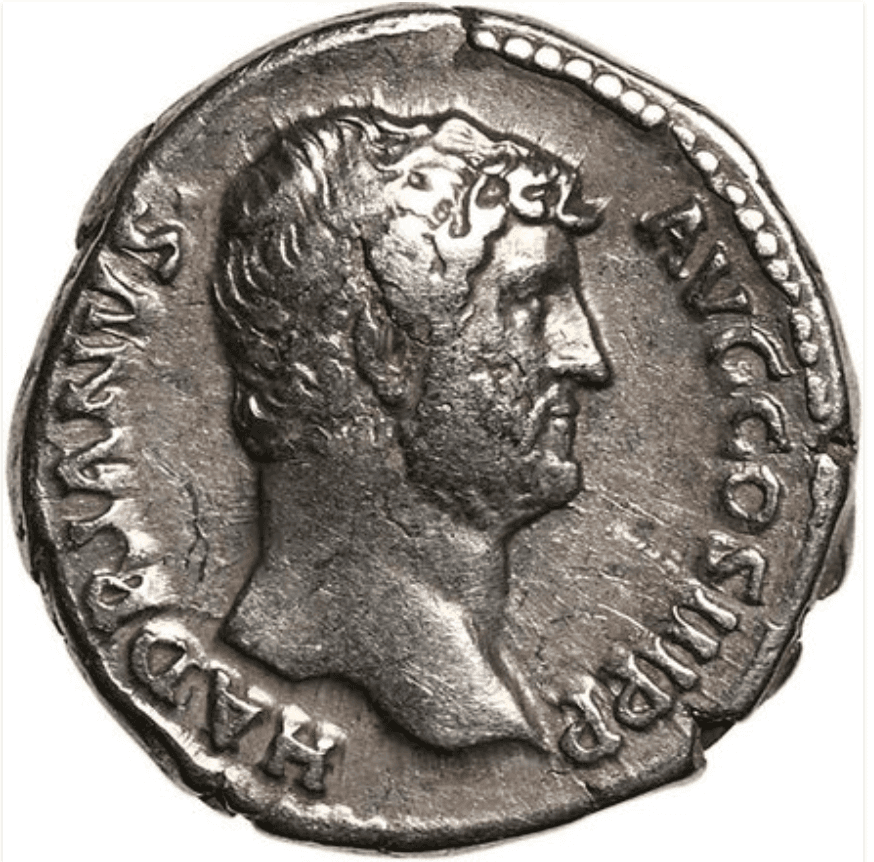

AEGYPTOS · HADRIAN’S TRAVEL SERIES
Aegyptos brings the Nile province into Hadrian’s provincial series. As with the other travel types, the denarius gives a territory a presence of its own, framing the emperor’s journeys through images of the lands that sustained the Roman world.
AR DENARIUS · UNGRADED · TRAVEL SERIES

NILVS · HADRIAN’S TRAVEL SERIES
The Nilus type places the river at the centre of Egypt’s provincial identity. In the travel series, this personification carries the idea of abundance, fertility, and the essential geography that linked Egypt to the wider Roman empire.
AR DENARIUS · UNGRADED · TRAVEL SERIES

ITALIA · HADRIAN’S TRAVEL SERIES
Italia returns the travel series to the heart of the empire. Its personification connects the provinces to their centre, making the sequence not only a record of movement but also a statement about the geographical unity of Roman rule.
AR DENARIUS · UNGRADED · TRAVEL SERIES